ReOC 1650
AIRBORNE GEO EXPLORATION Pty Ltd
ABN 41 634 559 210

AIRGEO Sovereign Airborne Geophysics Precision data.
Australian‑built systems. Decision‑ready results
Ph 0475 983 244
GOLD COAST QUEENSLAND
AUSTRALIA
.png)
AIRGEO Exploration &Discovery
AIRGEO Exploration &Discovery
AIRGEO Exploration &Discovery
DRONE MAG SURVEY & MANUFACTURING
AIRGEO Exploration &Discovery
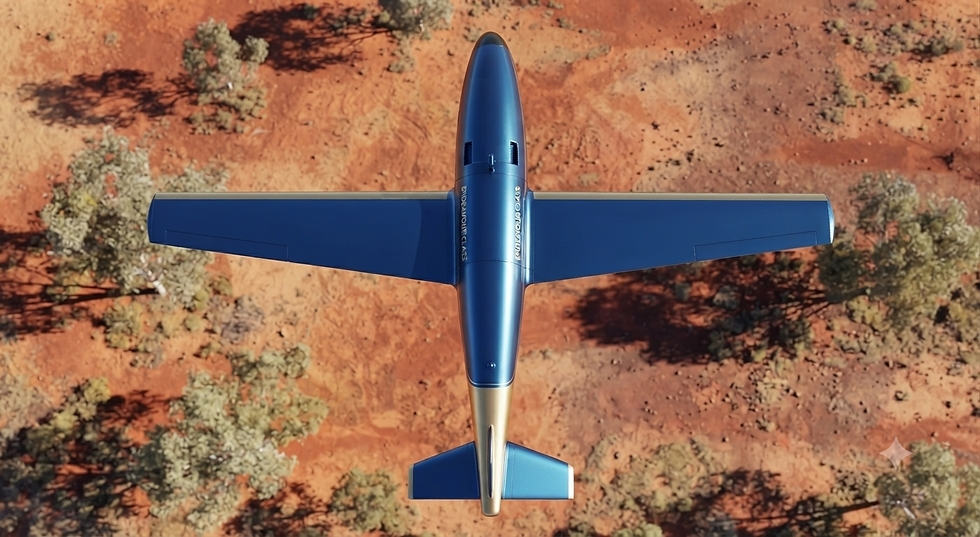
AIRGEO MagBird
AIRGEO MagBird Magnetic Sensor System
AIRGEO MagBird is a next‑generation UAV‑towed magnetometer system delivering high‑resolution magnetic data at low altitude with exceptional stability, repeatability, and operational safety. It brings airborne magnetic intelligence into the UAV era — affordable, scalable, sovereign.
Why AIRGEO MagBird Exists
Traditional airborne magnetics is expensive, high‑risk, and inaccessible for many exploration and environmental applications. MagBird provides a modern alternative: a purpose‑built, Australian‑designed system that delivers high‑quality magnetic data with lower cost, lower risk, and greater deployment flexibility.
AIRGEO MagBird System Capability
AIRGEO MagBird System provides complete airborne magnetic survey capability — from system design through to actionable insight. We combine sensor engineering, survey execution, and interpretation to ensure each project delivers meaningful outcomes, not just datasets.
-
multi-sensor magnetic system with enhanced spatial sensitivity
-
Ultra‑low‑altitude flight envelopes
-
High‑resolution scalar magnetic data
-
Aerodynamically stable body with low noise signature
-
Real‑time QC & mapping (AIRGEO MagBird Groundstation)
-
Modular sensor bay for future upgrades
-
Designed for Australian conditions and regulatory frameworks
Technical Highlights
-
Aerodynamic ogive nose, elliptical mid‑section, tri fin tail, sensor and 1.2m long for aerodynamic stability
-
Symmetrical airfoil wings for Gradiometer sensors, combined 4 stabilised bridle mounts for UAV towing
-
QuSpin QTFM2 magnetometer custom 3 sensors integration
-
7.2v (2S) 3500mah Li-ion battery architecture for long endurance survey flights
-
RFD 900 telemetry + custom programmed Teensy 4.1 microcontroller Mag and peripherals integration
-
Real‑time scalar QC map + OLED status
-
Custom intelligence system Magbird Groundstation
-
Trusted‑country electronics and fabrication
Use Cases
-
High sensitivity Mineral exploration
-
Environmental mapping
-
UXO detection
-
Government land management
-
Research and academic studies
How Multi Sensors Improve Survey Results
1. Lateral gradient sensitivity:
Dual Wing sensors, 1.2m apart (wing tip to wing tip) provide Cross-line variation detection with sensitivity to narrow HM stringers, sorting patterns, subtle lateral changes in mineral concentration
This is especially useful in mineral sands (or weak signal areas), where:
-
deposition is often laterally heterogeneous
-
features are subtle and patchy
2. Noise / platform filtering:
-
compare wing sensors (common-mode noise rejection)
-
identify heading effects
-
stabilise data in processing
This matters more in low-amplitude environments like mineral sands.
3. Three-sensor fusion potential
With:
-
wing L (+600mm)
-
wing R (-600mm)
-
tail (-930mm)
Sensors distance between each other.
** a vertical separation of tri sensor version will be a future iteration with Mag/Rad variant
You can derive:
a) Pseudo gradients
-
lateral gradient: (L – R)
-
longitudinal variability: (wing avg vs tail)
b) Near-field vs far-field discrimination
-
tail sensor slightly offset → different response to:
-
drone noise
-
very shallow sources
-
Ready to optimize your next survey with high-resolution airborne intelligence?